Though I still have a hard time believing it, school's out. Despite there being a couple of times I didn't think we would, we actually made it. Mission accomplished.
This year, for the first time in my career, I actually attended a graduation comprised of former students. Of the seventy two graduates, I taught six of them all the way back when they were eighth graders. And by eighth graders, obviously I mean awkward, bumbling, thirteen year-old kids, doggedly unaware of their actions. And as they walked (well, sauntered) across the stage as fledgling adults, I was consumed with two feelings. The first, not too shockingly, was pride. But the second? Relief. Overwhelming relief.
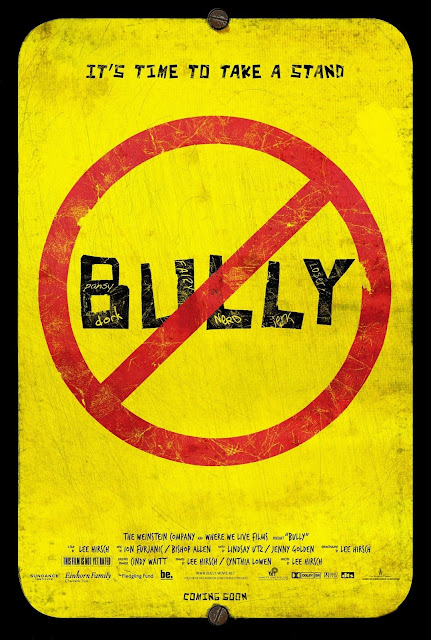 Bully, at least early on, absolutely destroyed me. The documentary opens with a father looking directly into the camera and detailing the events that led to the suicide of his young son, Tyler. For at least the first half of the film, this overwhelming sense of sadness and anger permeates every aspect of Bully. It can be pretty tough to watch at times...
....which is why I showed it as the end-of-the-year film in my English class. It was seven-eighths something they needed to see with a dash of maybe they'll actually be quiet and listen. And outside of the occasional verbal outburst, this film succeeded on both fronts.
Bully tells six separate stories of varying intensity, some more effective than others. Here's a quick rundown of the first four:
Tyler: Perhaps most grueling, this segment details the suicide of a seventeen year-old kid after years of bullying. Tyler's parents seek justice from the school board and the district to limited results.Their story anchors the documentary.
Alex: The face and star of Bully, this story evoked the biggest response from my students. See, Alex is a painfully awkward kid trying to navigate the treacherous waters of sixth grade in Iowa. He's presented as a shy kid, a real goofball, in desperate need of a friend. Sadly, Alex appears to confuse bullying with his friends messing around.
This year, for the first time in my career, I actually attended a graduation comprised of former students. Of the seventy two graduates, I taught six of them all the way back when they were eighth graders. And by eighth graders, obviously I mean awkward, bumbling, thirteen year-old kids, doggedly unaware of their actions. And as they walked (well, sauntered) across the stage as fledgling adults, I was consumed with two feelings. The first, not too shockingly, was pride. But the second? Relief. Overwhelming relief.

....which is why I showed it as the end-of-the-year film in my English class. It was seven-eighths something they needed to see with a dash of maybe they'll actually be quiet and listen. And outside of the occasional verbal outburst, this film succeeded on both fronts.
Bully tells six separate stories of varying intensity, some more effective than others. Here's a quick rundown of the first four:
Tyler: Perhaps most grueling, this segment details the suicide of a seventeen year-old kid after years of bullying. Tyler's parents seek justice from the school board and the district to limited results.Their story anchors the documentary.
Alex: The face and star of Bully, this story evoked the biggest response from my students. See, Alex is a painfully awkward kid trying to navigate the treacherous waters of sixth grade in Iowa. He's presented as a shy kid, a real goofball, in desperate need of a friend. Sadly, Alex appears to confuse bullying with his friends messing around.

